Many people perceive woodworking as a close-grained, unchanging craft with firm bounds that has remained that way for a long time. That there are only certain things you can create, shape, or share within the strong characteristics wood maintains as a material. Despite these perceptions, artist and instructor Olivia Van Oot harmoniously combines her explorations of gender and place with a historically untraditional medium in wooden quilting. The results challenge concepts of the familiar human experience in both material and form.
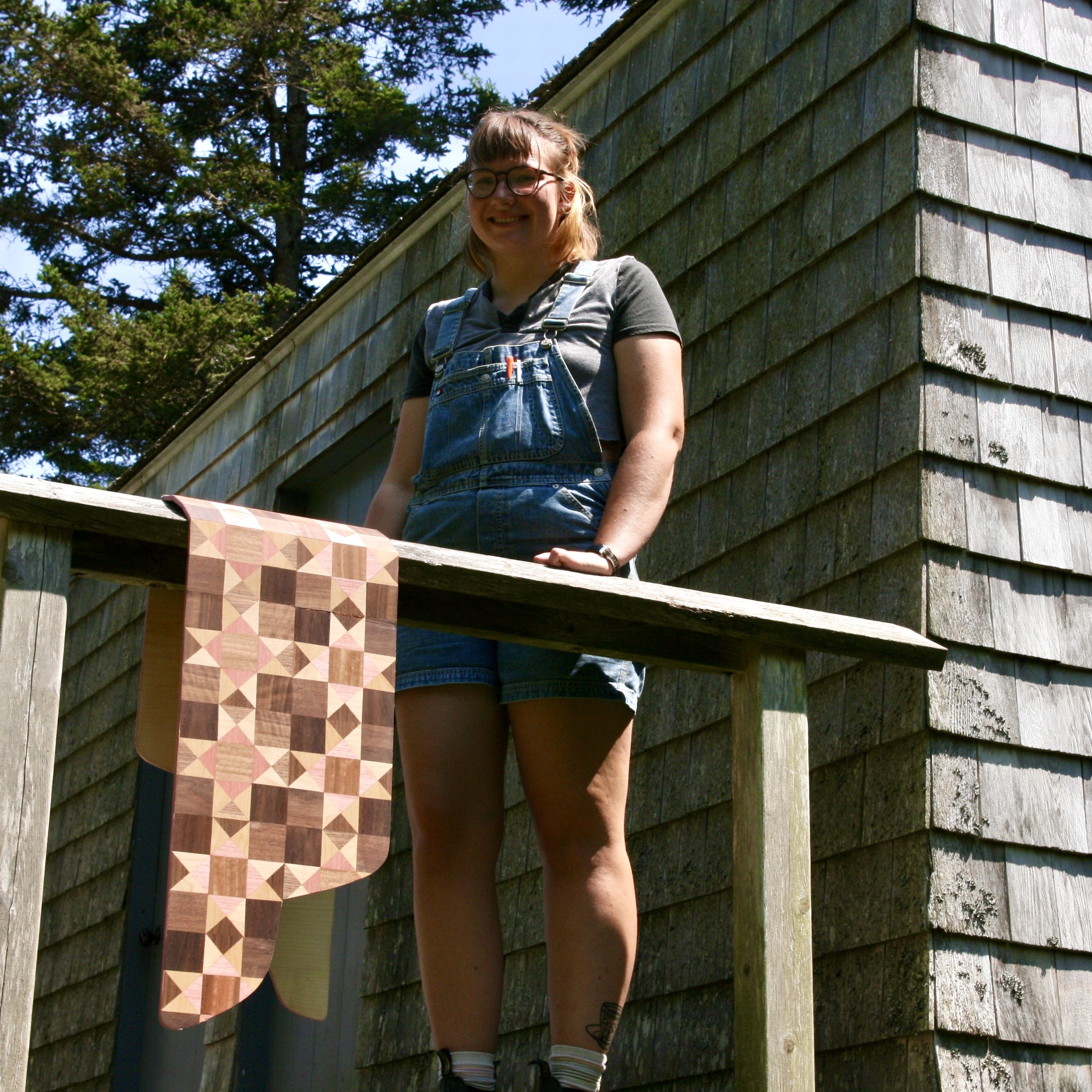
“I make work centering quilt iconography around themes of coming of age as a young woman today. By portraying these themes through my work I touch of aspects of life not usually portrayed in this medium. I strive to capture small fleeting moments in a static unchanging object. I draw inspiration from quilters and woodworkers who came before me and make work that relates to my life today as their work related to theirs,” shares Van Oot.
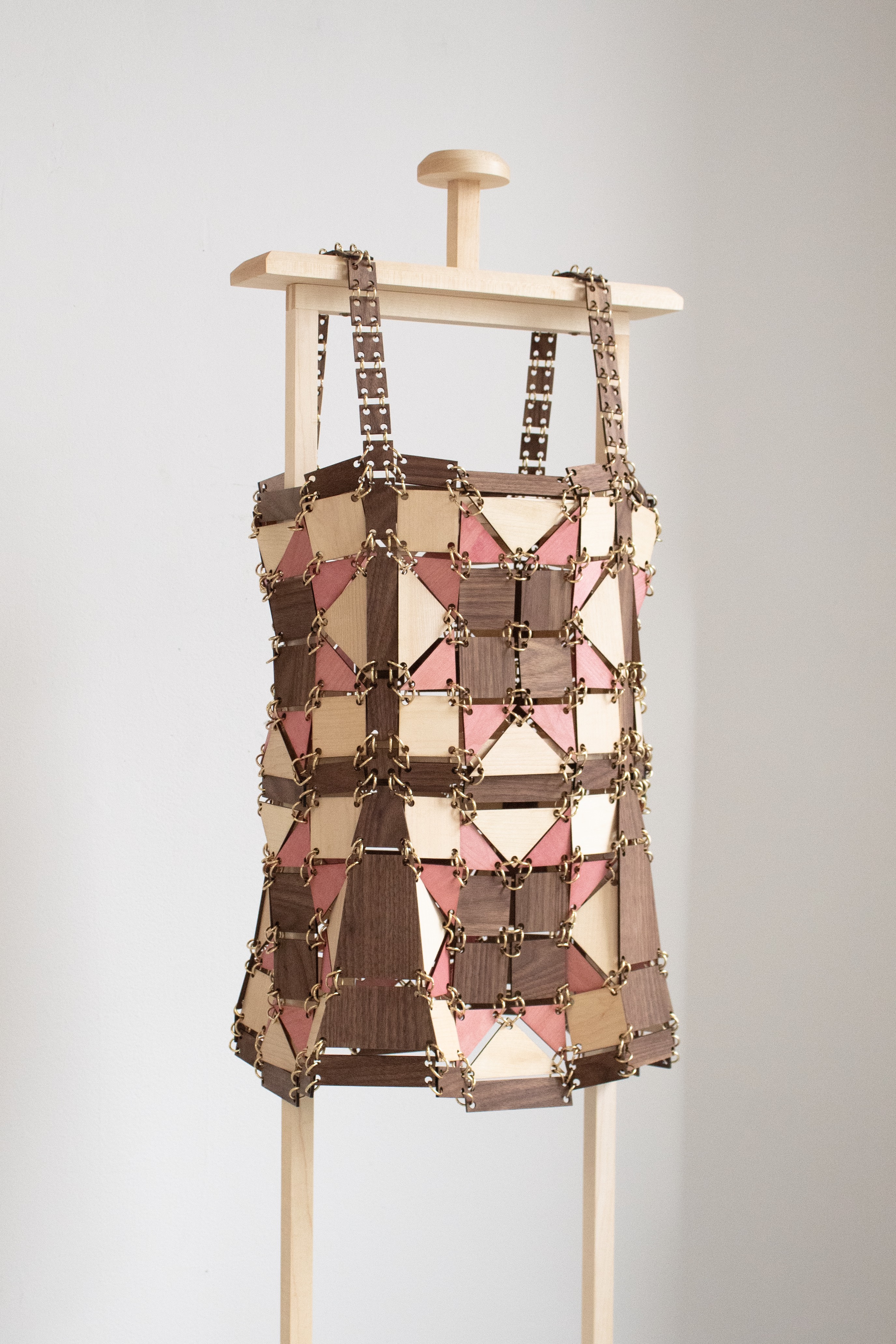
The complex techniques Van Oot chooses to use in her work effortlessly complement her equally as layered subjects. Her pieces grab the viewer’s attention in both aesthetic and message. Utilizing such individually significant craft cultures such as quilting and woodworking on their own can make this incredibly difficult to accomplish. Yet, Van Oot’s work highlights a liveliness within these new yet still familiar structures that we otherwise miss in the hurriedness of our lives.
Van Oot first became interested in woodworking as a freshman at the Maine College of Art & Design where introductory classes in woodworking and furniture design captured her fascination. There she spent several years creating in a diverse, collaborative and educational environment. Currently she practices out of a shop she shares with one friend from school, allowing for a smaller but still communal atmosphere.
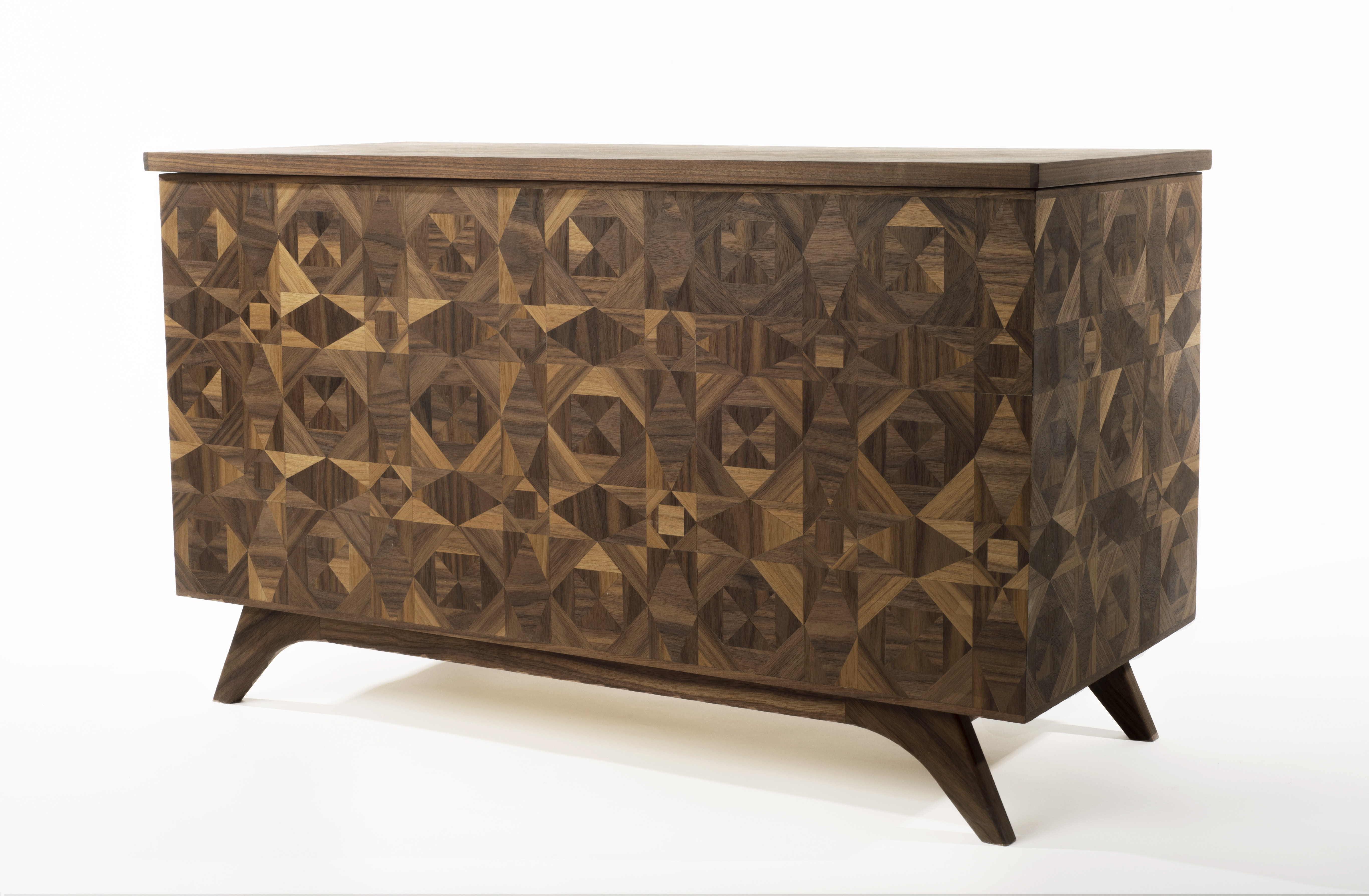
It was also during school that quilting became a hobby for Van Oot. She began exploring the craft as an outlet during her less-inspired periods in the woodshop.
“Together with a couple of friends we started an unofficial quilt club where we spent the majority of our nights quilting. This newfound artistic practice came with less pressure and more freedom, we were doing it just for ourselves. I had learned to sew at a young age with my grandmother but hadn’t practiced it consistently in a longtime when I picked up quilting. This hobby gradually began to inform the work I was doing in the woodshop. This is where the wooden quilt block idea first came to be,” she explains.
Van Oot also teaches her unique techniques and will present at the upcoming Furniture Society FS 25 conference in Syracuse, NY in a demonstration titled, “Woodworking, Quilting and Gender: Quilting with Veneer.”
“In this demonstration I will teach how I have implemented parquetry, a technique used to create geometric patterns using veneer, into my work. Using this process I apply traditional quilt patterns to a variety of wooden furniture and objects,” she explains, “This work has led me to think about how one’s personal gender expression exists in connection to the art they make. During this demonstration I hope to show how woodworking and art in general can draw inspiration not just from the just history of one’s own field. The combination of two things that historically don’t go together can bring new perspective and meaning to both.”
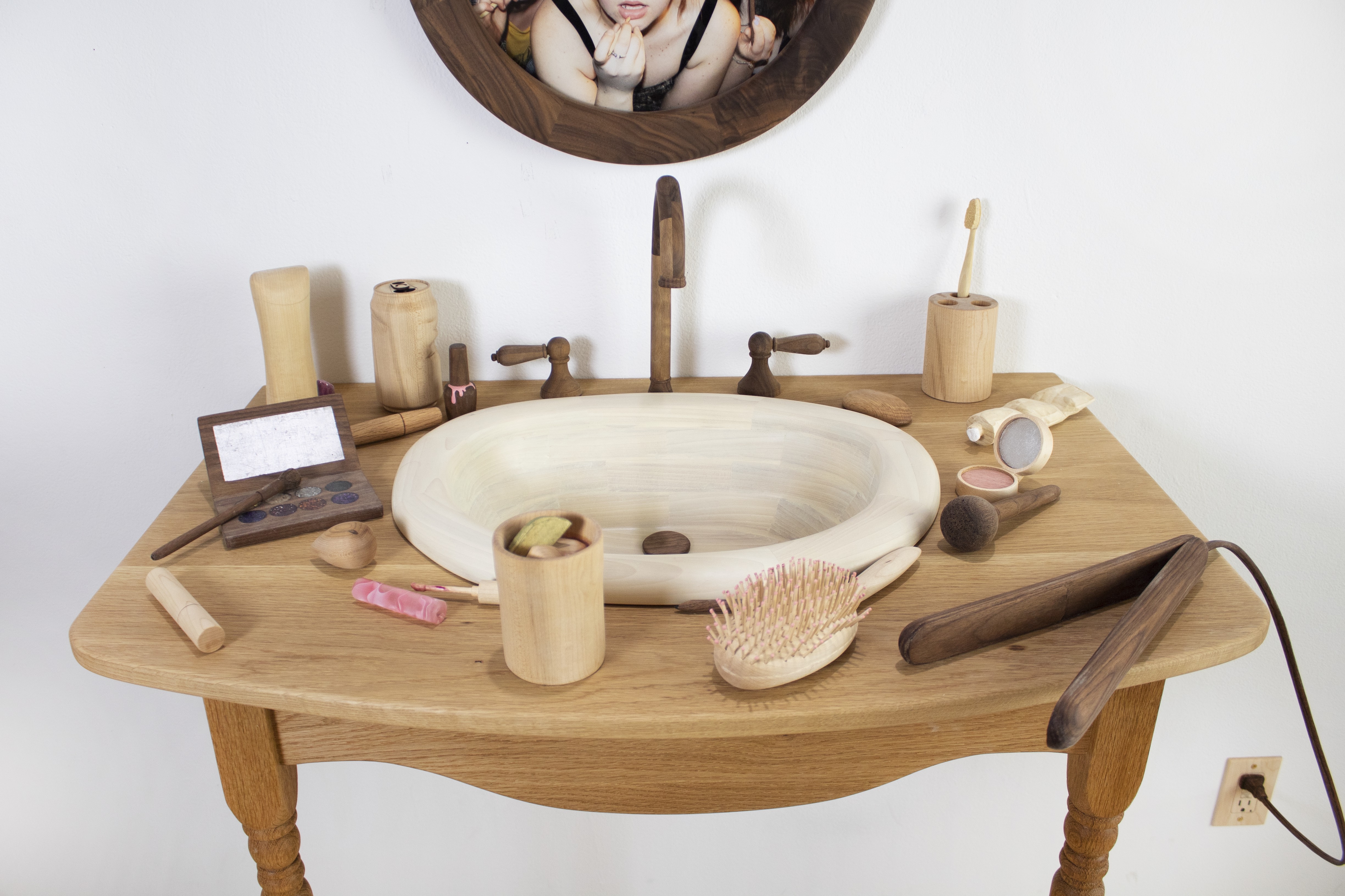
The combination of the intricacy of Van Oot’s work and the platform each object provides creates an exchange that is fascinating to observe. No longer is a hairbrush a simple inanimate beauty tool. Instead, Van Oot shows a new way to examine our relationship with how we view and express ourselves and our world. Using everyday objects in a non-traditional context helps us challenge what we may have unconsciously accepted as the norm.
However, shattering perceptions doesn’t always happen easily, especially as a woman or gender nonconforming maker in a male-dominated craft. Van Oot also went through a difficult adjustment period while transitioning into the professional woodworking world after college.
“In school women in woodworking seems like a given. The idea of it as a male-dominated field seemed like a far off concept. Working in a production shop today I realized that this is the reality for many in the field. Lucky I work in a shop that has provided a very supportive, encouraging and educational environment,” she shares.
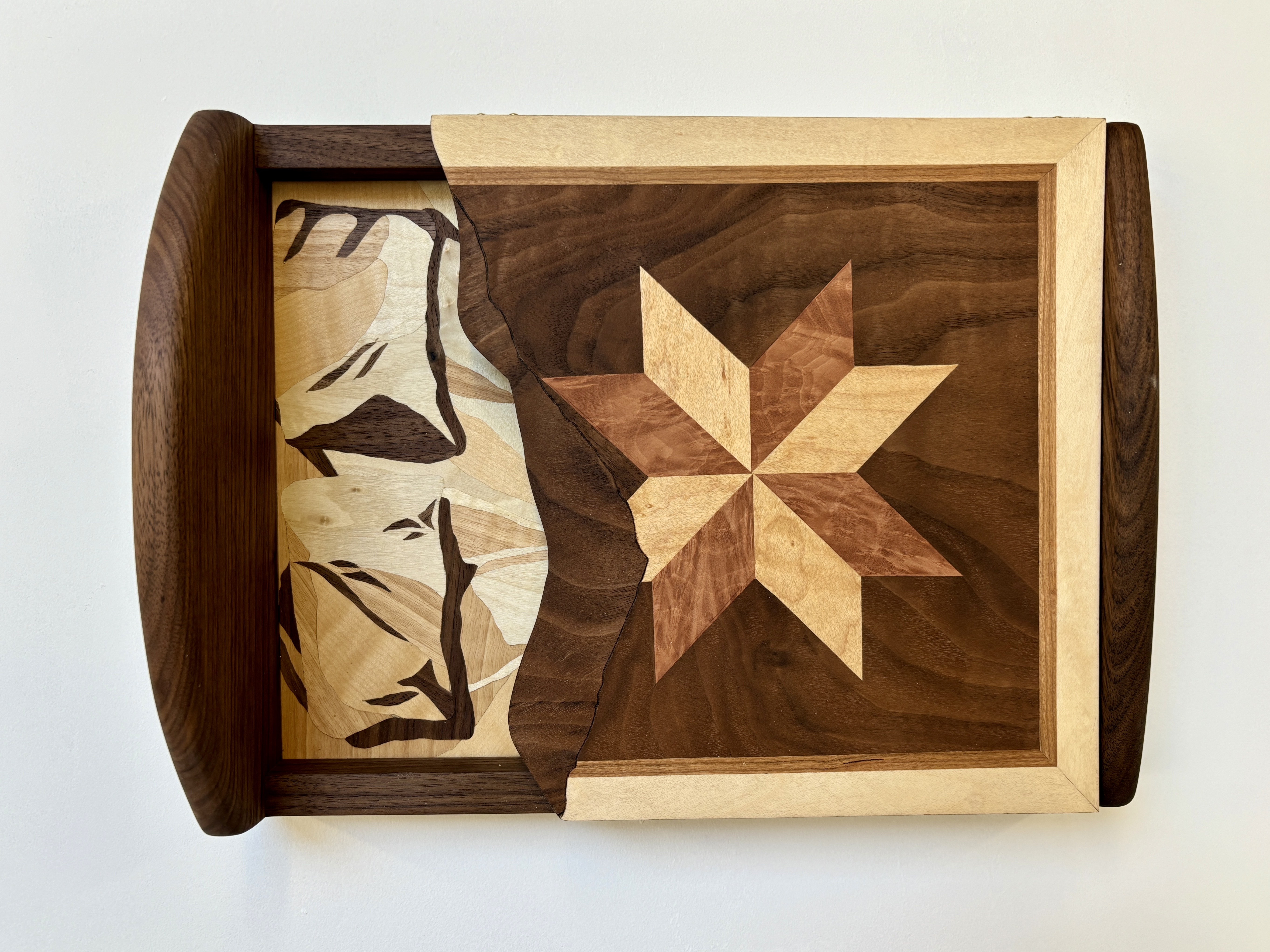
There is the constant urge as individuals to push forward with our skills and desire to create a place within the craft. Those are things that only we can build for ourselves. This is not an easy balance to maintain with some larger cultural aspects of the traditional woodworking field.
“Despite the positive, existing in an environment where everyone is a man much older and more experienced than me, it is easy to think of myself as an outsider. Confronting these internal feelings of “I don’t belong” has lead me to question why these feelings persist in an environment where everyone is doing everything right,” shares Van Oot.
“Women, queer and gender nonconforming people are welcomed and feel a sense of belonging in most craft school and educational environments. However this doesn’t translate to the make up of the workplace. Still more work needs to be done to make more workplaces into welcoming spaces where more people who are not just white men would want to work. These people bring a more diverse array of perspectives and experiences to the table (or the bench).”
To view more of Van Oot’s work you can follow her on Instagram at @vanoot.art and her website Oliviavanoot.com. For more information on the FS 25 Conference and her demonstration visit The Furniture Society conference website.
All images courtesy of the artist.

Leave a comment